
TALK – Currents of Restitution: Abolishing the Museum
TALK – Currents of Restitution: Abolishing the Museum
Info
Title
Currents of Restitution: Abolishing the Museum
Talk between
Conversation with artist Sandra Gamarra and writer Gabriela Wiener, moderated by Ana Salazar Herrera
Participants
Open to all publics
Location
Zoom
Date
January 23rd, 2026 | 5 pm (Lisbon)
Information
Language
This talk will be held in Spanish
About
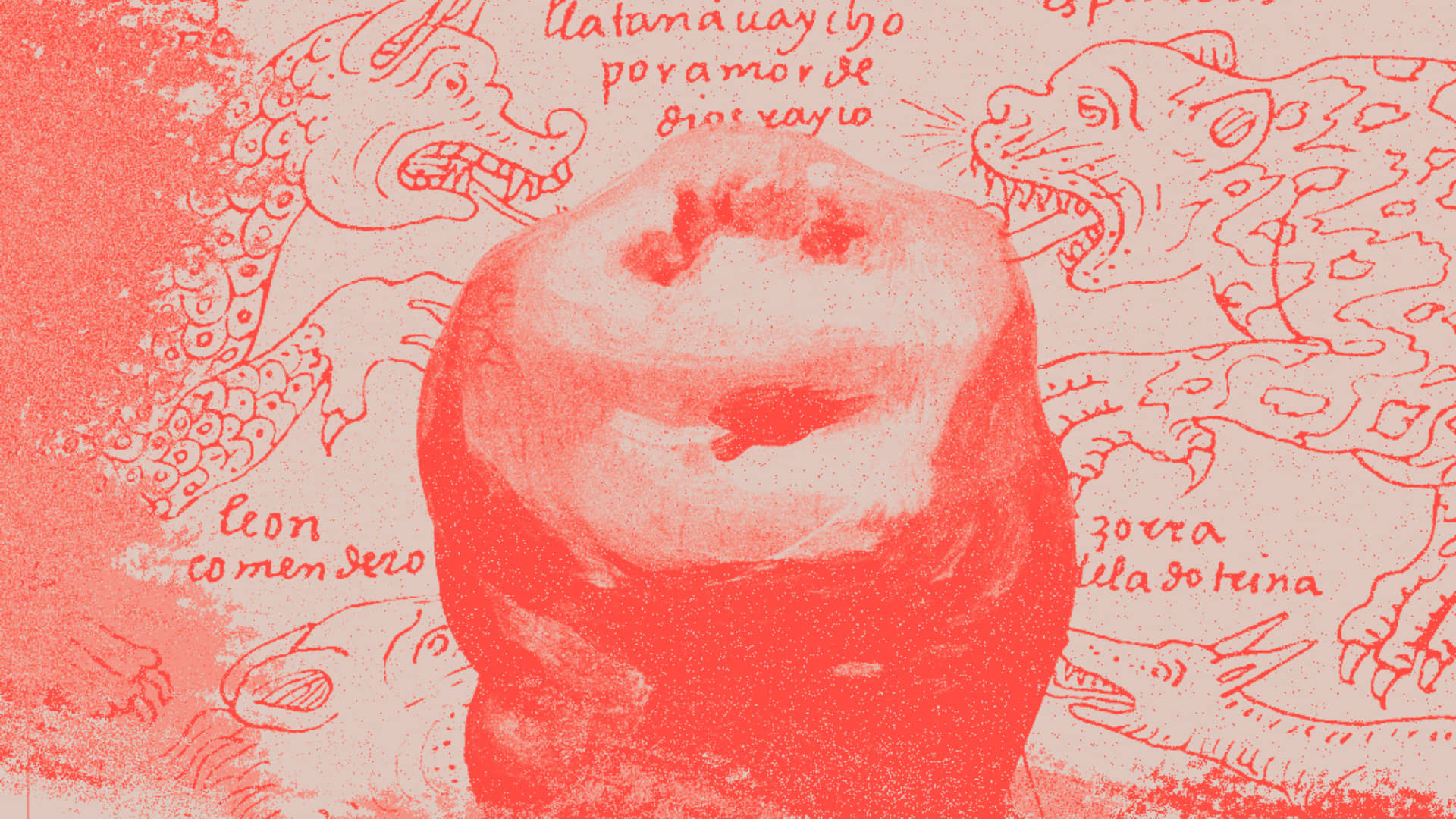
The group exhibition Currents of Restitution: Abolishing the Museum, featuring artists Pamela Cevallos, Sandra Gamarra, and Astrid González, is presented at Hangar — Centro de Investigação Artística from November 27, 2025 to January 31, 2026. Inspired by the work of theorist and activist Françoise Vergès, the exhibition is based on the premise that “European museums are repositories of plunder” and questions the possibility of decolonizing institutions born from spoliation and violence. The presented works confront the colonial narratives that structure European archaeological and ethnographic collections, opening paths to rethink the forms of symbolic, spiritual, and discursive restitution.
The exhibition includes works by Pamela Cevallos (1984, Quito), a visual artist and anthropologist, who, in Cómo liberar un pájaro proposes a symbolic restitution of pre-Hispanic ceramic instruments, restoring their murmur and voice through collaborative practices; Sandra Gamarra (1972, Lima), who critically explores art history and museum systems, exposing the racial and epistemological hierarchies that underpin Western collections. Her works Cuando las papas queman and Exhibitor I and II confront the colonial gaze and reimagine the museum as a space of resistance; and Astrid González (1994, Medellín), a multidisciplinary artist who intertwines Afro-descendant spirituality and institutional critique and who exhibits Sahumado, a video about purification rituals and symbolic repatriation, summoning silenced artifacts to return home.
The exhibition is curated by Ana Salazar Herrera, Ecuadorian-Portuguese curator and founder of the Museum for the Displaced. She was co-curator of the Diriyah Contemporary Art Biennale 2024 in Saudi Arabia; interim curator at the Ludwig Forum Aachen (2022–23), and assistant curator at the NTU Centre for Contemporary Art Singapore (2016–20). She holds a master’s degree in Curatorial Practice from the School of Visual Arts, New York, and a bachelor’s degree in Piano from the Escola Superior de Música de Lisboa.
The conversation between artist Sandra Gamarra and writer Gabriela Wiener is part of the exhibition’s parallel program.
Sandra Gamarra trained in Fine Arts at the Universidad Pontificia Católica del Peru and at the University of Cuenca, Spain. She currently lives and works in Madrid. Her multidisciplinary production – including sculpture, painting, video, texts and installation – sets out to critique the notion of modernity. Whether it is artistic modernity, with works that question the place and mechanisms of the exhibition space and musealisation, as well as the pictorial tradition. In a more historical and political vein, other pieces document episodes of colonial abuse. Gamarra incorporates methodologies specific to the archive, documentation, appropriation and miscegenation of non-artistic objects transferred to the field of art to denounce the role and historical responsibility of the West in colonial exploitation. She has had solo exhibitions in venues such as Casa de América, Madrid (2003), Bass Museum of Art, Florida (2011) and Artium, Vitoria (2014), among others. She has participated in collective exhibitions such as the Venice Biennale (2009), Chile Triennale, Micromuseo de Lima (2009), São Paulo Biennial (2010, 2011), Cuenca Biennale, Ecuador (2011) and Montevideo Biennale (2016). She has works in collections such as MoMA, New York; Tate Modern, London; Museo de Arte Contemporáneo, Lima; Museo de Arte do Rio, Rio de Janeiro; Patio Herreriano, Valladolid; Museo de Arte Contemporáneo, Castilla y León; and MACBA, Barcelona.
Sandra Gamarra represented Spain at the Venice Biennale 2024, with the project Pinacoteca Migrante (2023-24). Her extensive research is manifested in new works based on paintings that belong to the national heritage of Spanish art collections from colonial times to the Enlightenment. Each piece investigates the absence of decolonial narratives within museums, revealing the biased representations of colonisers and the colonised. Within this field of study, sociology, politics, art history, and biology intertwine to provide a reinterpretation, where too often ignored consequences of history connect to present-day racism, migration, and extractivism in relation to both the ecological and museological crises.
Pinacoteca Migrante condemns the Spanish colonial past and creates its own museum from copying existing works that are modified, collaged, and bring to the fore the European colonial gaze. She uses paintings such as a family by Frans Hals at the Thyssen-Bornemisza Museum, where an enslaved person appears, or a still life by Zurbarán from the Prado Museum, where there is a búcaro, which is a Mexican vessel. She occupies 5 rooms: Tierra Virgen/Virgin Land, the Cabinet of Extinction, the Cabinet of Illustrated Racism, Mestizo masks, Altarpiece of Dying Nature, and the outdoor space called Migrant Garden.
Gabriela Wiener is one of the essential voices of contemporary Latin American literature in the diaspora. A Peruvian writer, poet, and chronicler based in Spain, she has made the body a political and narrative territory. Her work dismantles the fictions of power, patriarchy, colonialism, and the mandates of heteronormativity and whiteness as systems of thought. Her earliest gonzo journalism stories were published in the narrative journalism magazine Etiqueta Negra. She is the author of the books Sexografías, Llamada perdida, Dicen de mí, and the poetry collections Ejercicios para el endurecimiento del espíritu and Una pequeña fiesta llamada Eternidad. She won her country’s National Journalism Award. She has created several performances staged together with her family, and wrote and starred in the theatre piece Qué locura enamorarme yo de ti. She is part of @Sudakasa, a collective project of migrant art and writing in Castilla-La Mancha, Spain, and is an editor at the imprints Yegua de Troya and Sudakasa Ediciones. Undiscovered, the English translation of her novel Huaco retrato, was a finalist for the 2024 International Booker Prize, PEN America, and the 2025 Rómulo Gallegos Novel Prize. Her novel Atusparia won the City of Barcelona Prize for Best Book in Spanish (2024).
Ana Salazar Herrera is an Ecuadorian and Portuguese curator exploring nomadic, polylinguistic, and transcultural subjectivities. She co-founded the Museum for the Displaced (2019–ongoing), a platform addressing migration and cultural resistance. Currently a Curatorial Research Associate for the Diriyah Contemporary Art Biennale (DCAB) 2026, Riyadh, Ana was Co-curator, DCAB 2024; Interim Curator at Ludwig Forum Aachen (2022–23); and Assistant Curator at NTU Centre for Contemporary Art Singapore (2016–20). She was part of the preselection committee for the 22nd Biennial Sesc_Videobrasil, São Paulo (2023); Curator-in-Residence at Künstlerhaus Schloss Balmoral, Germany (2021–22); a mentee of Project Anywhere (2020–21); and a Shanghai Curators Lab Fellow (2018). She holds an MA in Curatorial Practice from the School of Visual Arts, New York, and a BA in Piano from Escola Superior de Música de Lisboa, Portugal. Her writing appears in art magazines, exhibition catalogues, and academic journals.
